
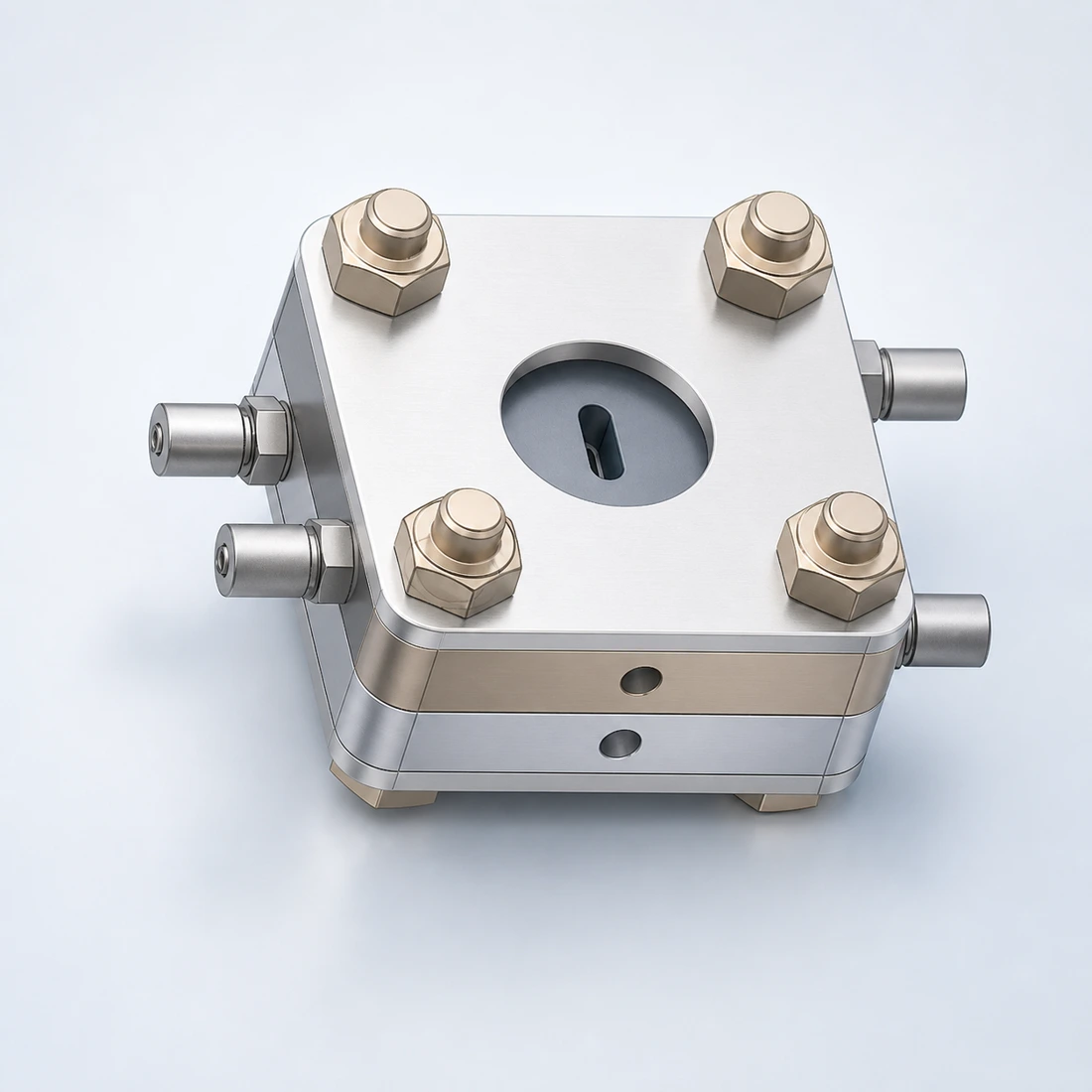
XAFS in situ cell
PEM electrochemical cell
In situ characterization of water electrolysis for hydrogen production.
- Function
- In situ characterization during hydrogen production by water electrolysis.
- Beam path / detection
- Normal-incidence beam passes through the working electrode, membrane / electrolyte and opposite window.
TECHNICAL SPECIFICATIONS
Specifications and configuration
- Function
- In situ characterization during hydrogen production by water electrolysis.
- Beam path / detection
- Normal-incidence beam passes through the working electrode, membrane / electrolyte and opposite window.
- Atmosphere
- Side ports for electrolyte circulation or gas lines.
- Sealing / structure
- Four corner bolts compress flanges with O-ring or metal-gasket seals.
- Sample mounting
- Film, pellet, carbon paper or foil secured on the central stage with the active area in the beam.
- Applications
- Battery, electrocatalysis, CO₂ reduction and water-splitting studies; technique compatibility requires matching.
Materials, windows, temperature control and interfaces are selected for the experiment. Confirm instrument compatibility and the final technical agreement.
LABORATORY PLANNING
Prepare your laboratory
- Compatibility
- Confirm beam geometry, cell mounting, window material, sample thickness and instrument clearance.
- Utilities
- Match gas, liquid, electrical and heating / cooling connections to the experiment.
- Installation review
- Confirm sealing, material compatibility and operating limits with the technical team.
Cell requirements depend on the selected materials, interfaces and host instrument.
RESOURCES & SUPPORT
Explore PEM electrochemical cell
Match the system to your sample, measurement target and laboratory.