
Examples of light-element K edges covered by the brochure.
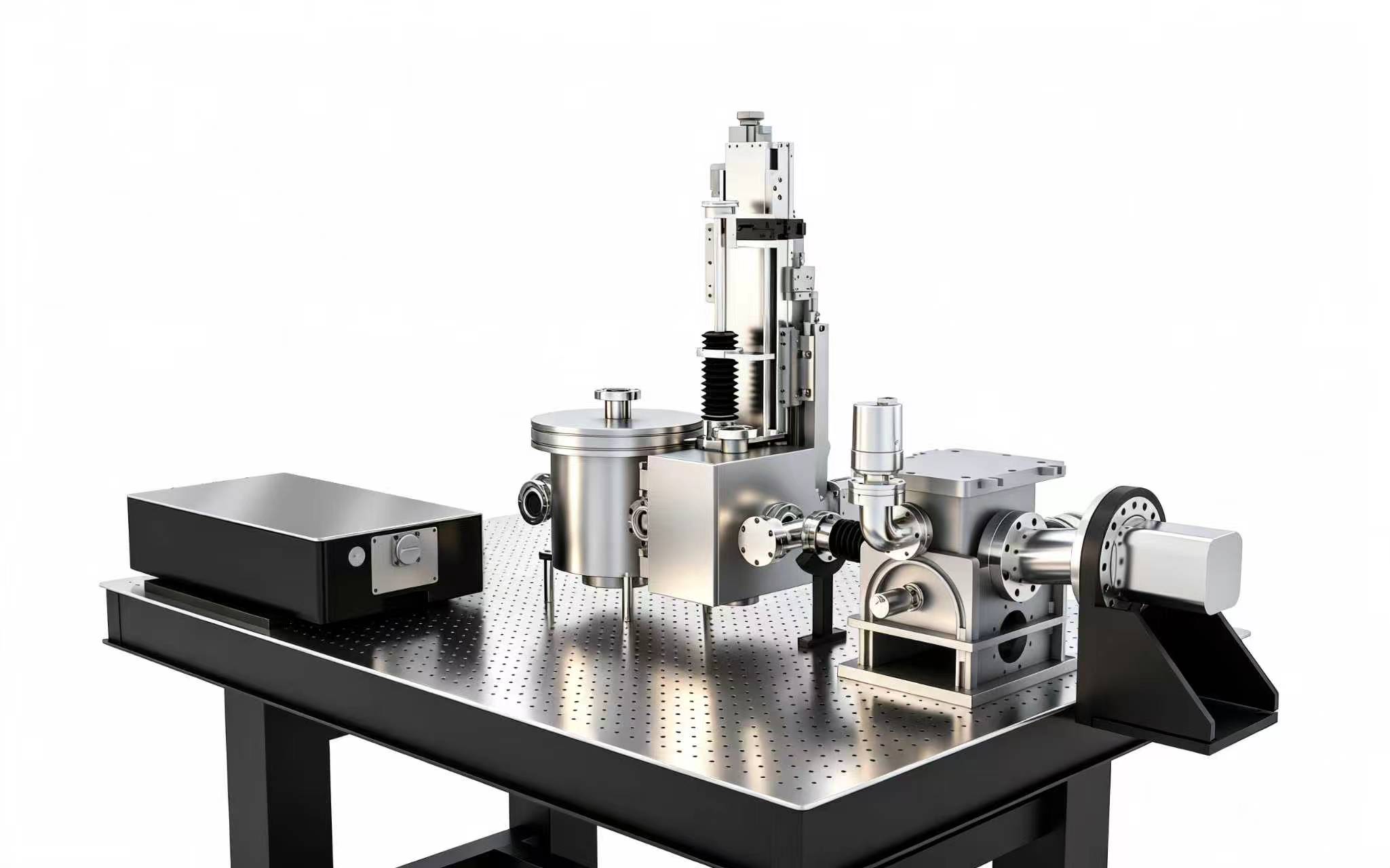
SOFT X-RAY ABSORPTION
proXAS
Soft X-ray NEXAFS
Laboratory NEXAFS for light-element K edges and selected transition-metal L edges, revealing electronic structure and coordination.
- Standard energy range
- 200–1200 eV
- Resolving power
- E/ΔE = 1500
TECHNICAL SPECIFICATIONS
Source, resolution and workflow
- Source
- Debris-free laser-driven XUV source
- Standard energy range
- 200–1200 eV
- Custom energy range
- 100–200 eV (custom configuration)
- Repetition rate
- 25 Hz
- Source power stability
- ±1.5%
- Spectrometer
- Aberration-corrected flat-field spectrometer
- Resolving power
- E/ΔE = 1500
- Sample mounting
- Multi-sample stage
- Instrument footprint
- 1.5 m × 1.0 m
- Software
- Integrated system control, spectral calibration and analysis
The brochure reports analysis down to 0.2 wt%; sample suitability and measurement conditions require assessment.
ELEMENTS & EDGES
A new view of light elements
Examples of transition-metal L edges; confirm the target edge and configuration.
The company’s hard-XAFS test application form does not apply to proXAS. Published papers and application case studies are not yet available for this product. Please contact our technical team to discuss configuration and sample suitability.
Discuss instrument configuration →NEXAFS APPLICATIONS
Electronic structure under relevant conditions
Investigate light elements and 3d transition metals, with sample configurations for thin films, gases and liquids. Applications include catalysis, batteries and environmental processes.
Representative NEXAFS spectra from the product brochure are shown alongside.
LABORATORY PLANNING
Plan the installation
- Instrument footprint
- 1.5 m × 1.0 m
- Planning
- Allow additional space for operation, maintenance and auxiliary systems.
- Utilities
- Confirm power, cooling, vacuum, access, loading and environmental requirements with the technical team.