
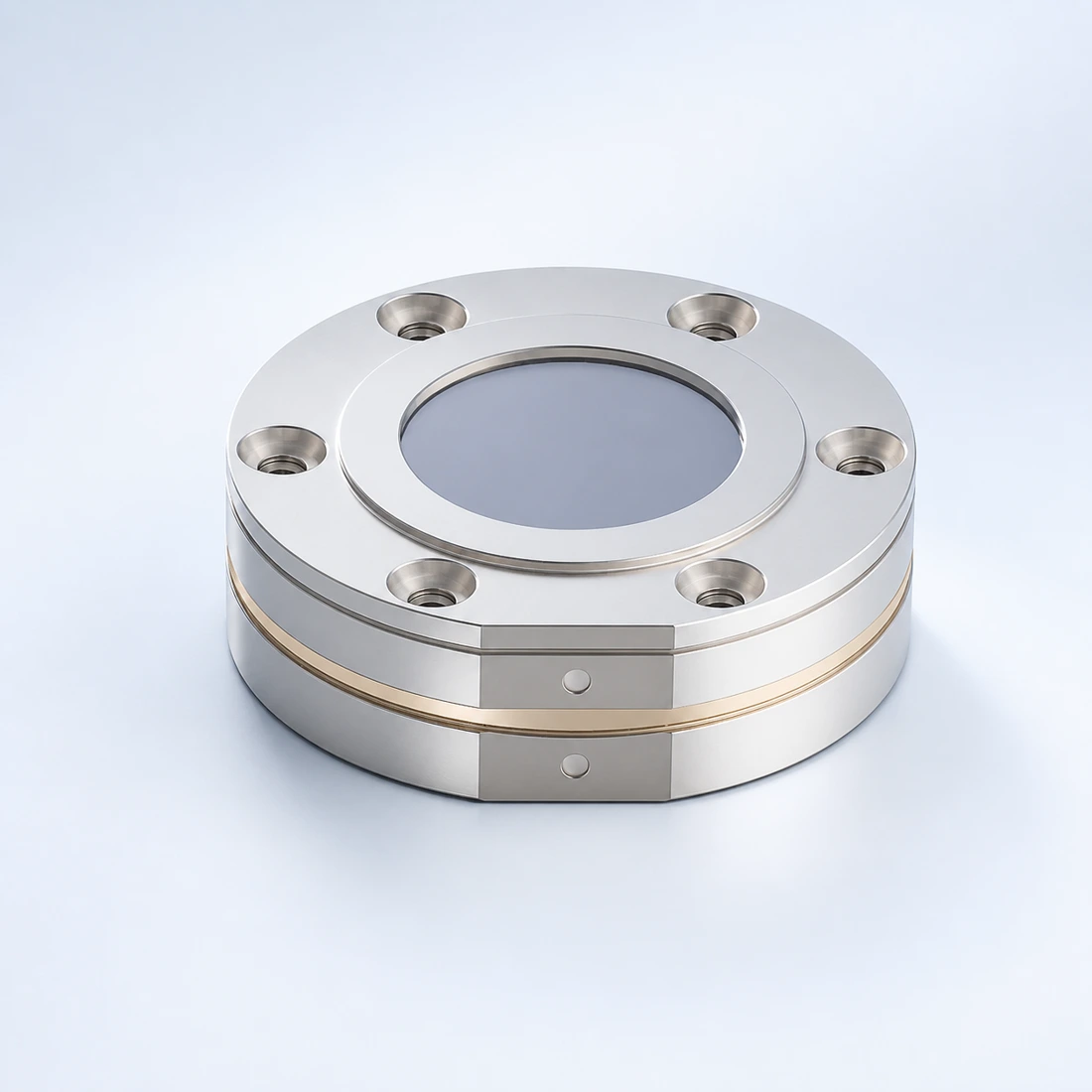
XRD in situ cell
Reflection-mode battery cell
Top-window reflection geometry for monitoring electrode surfaces during cycling.
- Function
- During battery cycling, reflection / grazing incidence through the top window monitors electrode surfaces and near-surface changes.
- Beam path / detection
- Incident and reflected / scattered / diffracted beams use the same top window.
TECHNICAL SPECIFICATIONS
Specifications and configuration
- Function
- During battery cycling, reflection / grazing incidence through the top window monitors electrode surfaces and near-surface changes.
- Beam path / detection
- Incident and reflected / scattered / diffracted beams use the same top window.
- Electrochemistry
- Two-electrode or three-electrode (WE/CE/RE) setup; insulated leads connect to a potentiostat.
- Atmosphere
- Assemble in a glovebox, then seal.
- Sealing / structure
- Two circular flanges, six bolt holes and O-ring compression; quartz, Kapton or Be window options.
- Sample mounting
- Working electrode faces the window; separator, counter electrode and electrolyte sit beneath it; spacers set thickness.
Materials, windows, temperature control and interfaces are selected for the experiment. Confirm instrument compatibility and the final technical agreement.
LABORATORY PLANNING
Prepare your laboratory
- Compatibility
- Confirm beam geometry, cell mounting, window material, sample thickness and instrument clearance.
- Utilities
- Match gas, liquid, electrical and heating / cooling connections to the experiment.
- Installation review
- Confirm sealing, material compatibility and operating limits with the technical team.
Cell requirements depend on the selected materials, interfaces and host instrument.
RESOURCES & SUPPORT
Explore Reflection-mode battery cell
Match the system to your sample, measurement target and laboratory.